Serengeti National Park Safaris
Endless Plains, Great Migration, and Africa’s Timeless Safari.
Best Time To Go
June to October for general game viewing; December to July for the Great Migration
High Season
June to October
Size
Approx 14,763 square kilometres
Altitude
920 - 1,850 metres
above sea level
Serengeti National Park Safari Holidays
Where the Great Migration Fills the Horizon
Serengeti National Park is the beating heart of safari travel — a place where the horizon stretches so far it blurs into the sky, and wildlife roams in numbers that defy belief. This UNESCO World Heritage Site is the stage for one of the world’s most spectacular natural events: the Great Migration, when over two million wildebeest, zebra, and gazelle traverse the plains in search of fresh grazing.
But the Serengeti’s magic is not limited to a single season. Its vast, varied landscapes — from golden grasslands and rocky kopjes to riverine forests and acacia-dotted savannahs — are home to Africa’s iconic “Big Five” and countless other species. Every visit feels like stepping into a nature documentary, with the drama of predator and prey unfolding before your eyes.
For travellers seeking the essence of wild Africa, the Serengeti delivers not just sightings but stories, not just landscapes but legends.
Why Visit the Serengeti National Park?
Few places on Earth embody the spirit of safari quite like the Serengeti. This is the home of the Great Migration, an awe-inspiring natural spectacle that sees over two million wildebeest, zebra, and gazelle move across the plains in search of greener pastures. Even outside migration season, the Serengeti offers some of the most reliable and diverse wildlife viewing anywhere in Africa, from big cats on the hunt to elephant herds crossing the golden grasslands.
The park’s landscapes are just as compelling as its wildlife. Wide open savannahs give way to granite kopjes — rocky outcrops that serve as lookouts for lions — while acacia woodlands provide shade for giraffes and birdlife. Each region of the Serengeti has its own character, meaning no two safaris here are ever the same.
Whether it’s the adrenaline of a predator sighting, the quiet beauty of a sunrise over the plains, or the sheer scale of the wilderness, the Serengeti delivers an African safari experience that lives up to every expectation.
Wildlife and Nature
The Serengeti’s sheer diversity of habitats supports one of the richest wildlife populations on Earth. The open grasslands are the realm of enormous herds of wildebeest, zebra, and Thomson’s gazelle, shadowed by prides of lion — the park has one of the highest densities of lions anywhere in Africa. Cheetahs favour the more open southern plains, while leopards lurk in the shaded branches along river courses.
Elephants, buffalo, and giraffes roam freely across the park, while hippos and crocodiles dominate the Grumeti and Mara Rivers. Birdlife is prolific, with more than 500 recorded species, including the kori bustard, secretary bird, lilac-breasted roller, and flocks of flamingos at seasonal lakes.
Beyond the famous Great Migration, the Serengeti is alive year-round. Topi and hartebeest graze alongside eland, warthog, and impala. Hyenas, jackals, and vultures play their vital roles in the ecosystem, ensuring nothing goes to waste. Even in the quieter months, the park’s balance of life and death, survival and adaptation, makes every game drive a lesson in the wild’s resilience.
Best Time to Visit the Serengeti
The Serengeti offers exceptional wildlife viewing in every season, but the experience shifts dramatically depending on the time of year. From June to October, the dry season offers classic safari conditions: short grass, clear skies, and animals concentrated near rivers and waterholes. Predator sightings are particularly rewarding, and the lack of foliage makes photography easier.
From December to July, the park becomes the arena for the Great Migration. Calving season in the southern Serengeti (January to March) sees hundreds of thousands of wildebeest births — and intense predator activity as lions, cheetahs, and hyenas take advantage of the abundance. In June and July, the herds face the perilous river crossings of the Grumeti and Mara, one of the most dramatic wildlife spectacles on the planet.
The green season (November and April–May) transforms the Serengeti into a lush paradise, ideal for birdwatchers and those seeking fewer crowds. Afternoon storms paint the sky in dramatic colours, and newborn antelope dot the plains. While some areas may be muddy, the rewards include vibrant scenery, unique sightings, and competitive lodge rates.
Safari Experiences in the Serengeti
The Serengeti’s sheer scale means there’s always something new to discover, whether you’re a first-time safari-goer or a seasoned traveller. Game drives here feel like moving through a living wildlife documentary, with each region offering a unique slice of the park’s character.
Classic Game Drives: From early morning drives in the golden light to late-afternoon excursions as the sky turns crimson, Serengeti game drives offer close encounters with lions, elephants, giraffes, and more. Skilled guides know where to find the action, whether it’s a leopard draped over a tree branch or a cheetah scanning the horizon.
Witnessing the Great Migration: Time your visit right and you could be surrounded by thousands of wildebeest on the move, or watching as they gather nervously at the river’s edge before a dramatic crossing. The scale and energy of the migration is unmatched in the natural world.
Hot Air Balloon Safaris: Drifting silently over the Serengeti at sunrise is a once-in-a-lifetime perspective. You’ll see the landscape unfold in every direction, with herds and predators moving far below. The flight ends with a champagne breakfast in the bush.
Walking Safaris: Led by armed rangers, walking safaris offer a deeper connection to the land. Learn to identify animal tracks, smell wild sage underfoot, and notice the small wonders often missed from a vehicle.
Whether you chase the migration, explore the quieter corners, or float above it all in a balloon, the Serengeti offers endless ways to connect with the wild.
Where to Stay in the Serengeti
Whether you prefer a private veranda overlooking the migration route or a remote tented camp far from the crowds, the Serengeti has an option for you.
- Luxury Lodges: Five-star comforts with infinity pools, fine dining, and sweeping views over prime wildlife areas. Perfect for travellers wanting style and service without losing touch with the wild.
- Classic Tented Camps: Elegant canvas suites that blend authenticity with comfort — think proper beds, ensuite bathrooms, and lantern-lit dinners under the stars.
- Mobile Migration Camps: Seasonal camps that follow the herds, placing you in the heart of the migration action at the right time of year.
We have access to a wide range of handpicked accommodation options in Serengeti National Park — from rustic eco-camps and authentic bush lodges to stylish tented retreats. If you don’t see the exact lodge or camp you’re looking for, just let us know — we’re able to arrange a variety of stays to suit different tastes, travel styles, and budgets.
A Selection of our Serengeti Safari Accommodation
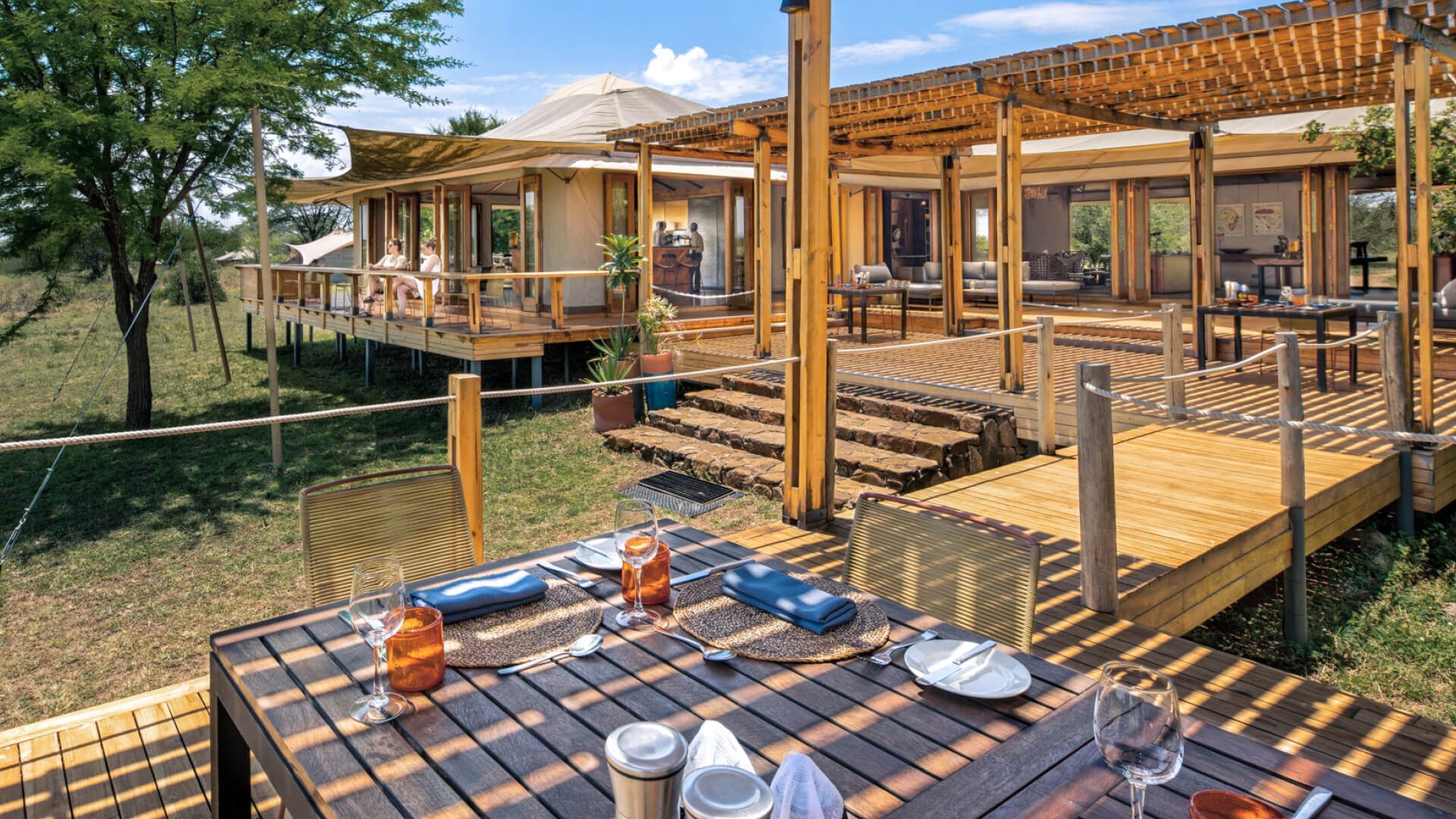
Sayari Camp
Serengeti National Park
Exclusive tented retreat in northern Serengeti with sweeping Mara River views, infinity pool, micro-brewery, spa, and prime Great Migration access.
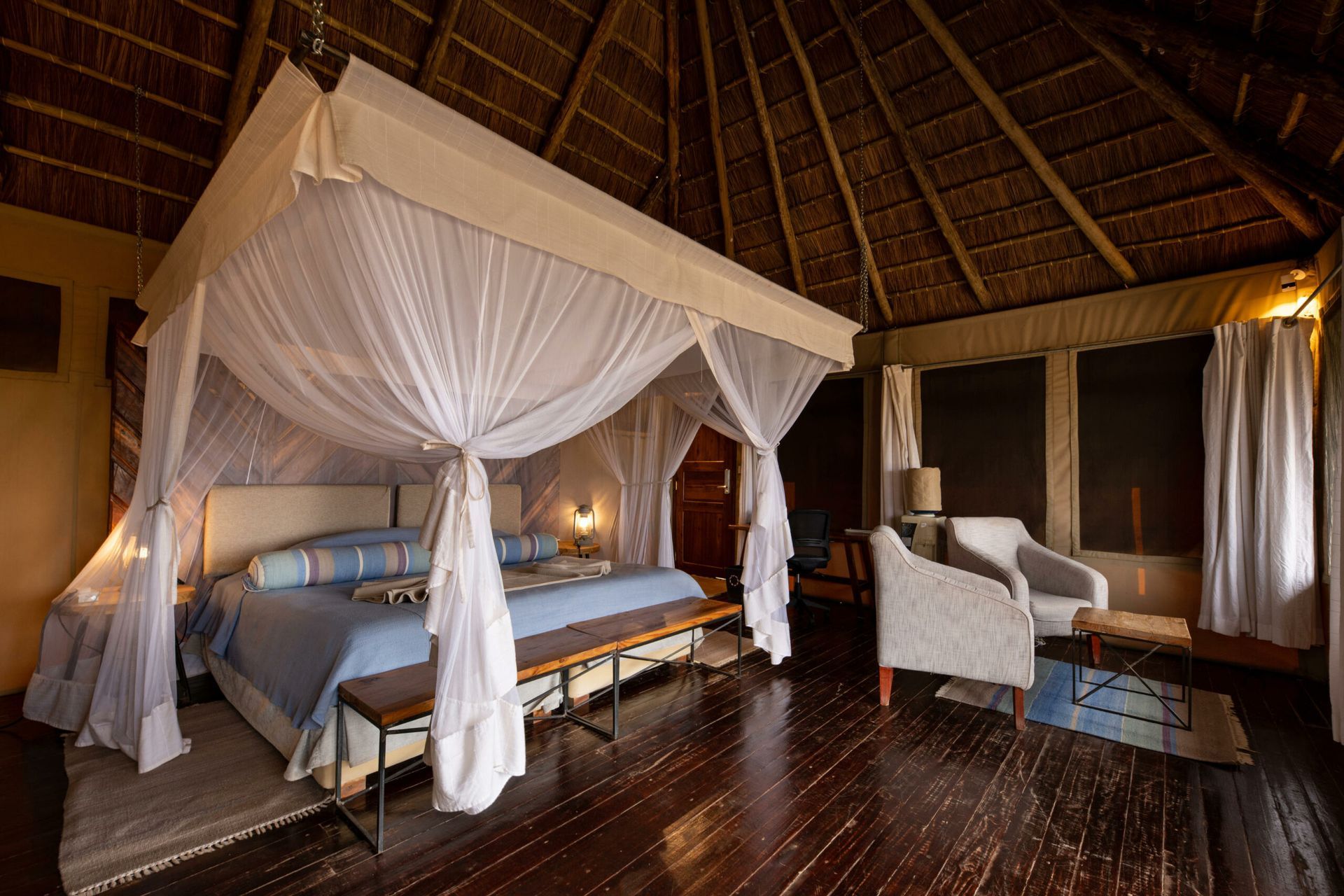
Kubu Kubu Tented Lodge
Serengeti National Park
Stylish tented lodge in central Serengeti with infinity pool, panoramic migration views, family-friendly suites, solar power, & unforgettable comfort.
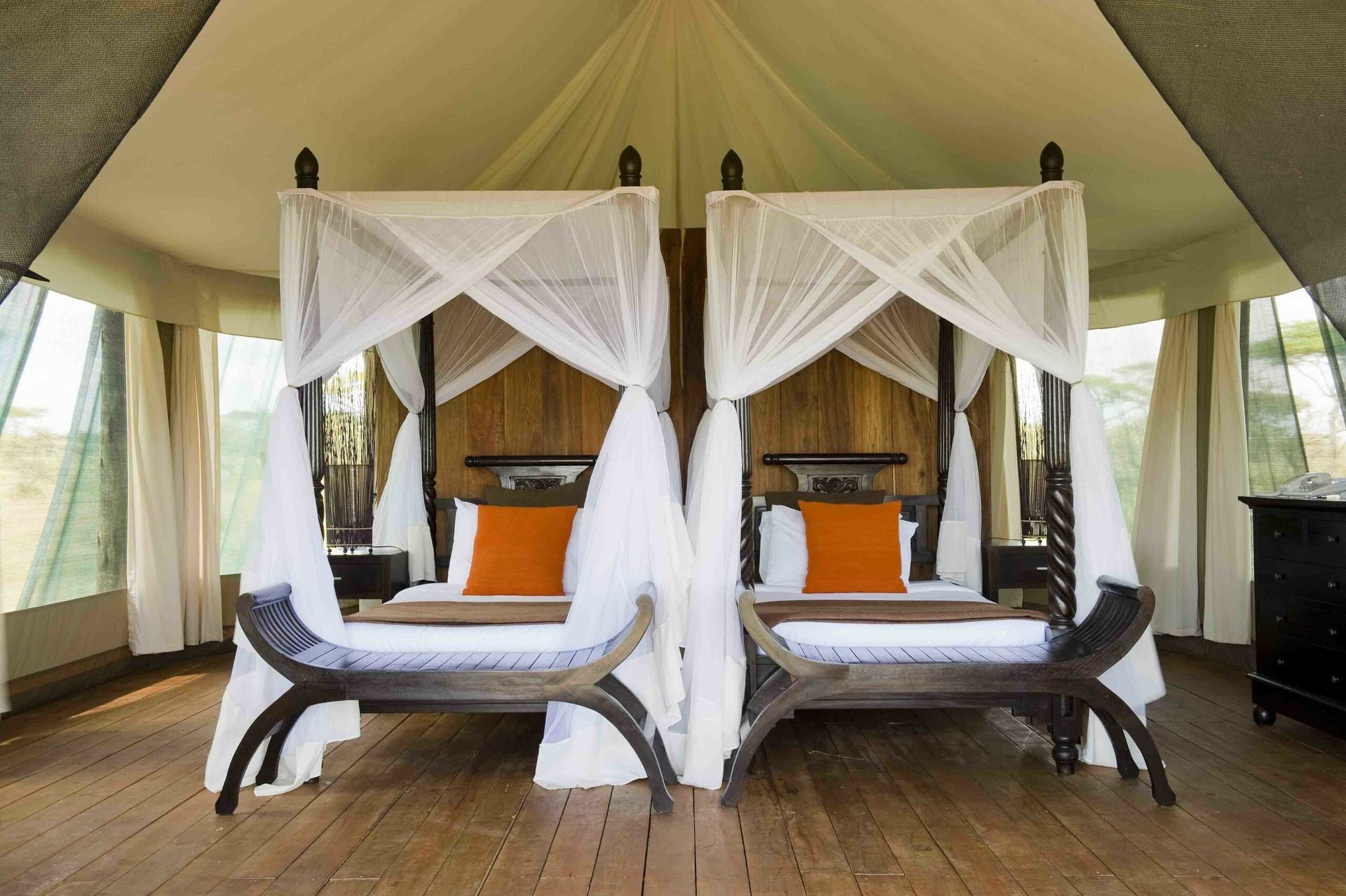
Lake Masek Tented Camp
Serengeti National Park
Eco-luxury tented camp on Lake Masek, with flamingo views, private decks, plunge pool, and prime access to Serengeti’s calving season
We have access to a wide range of handpicked accommodation options — from rustic eco-camps and authentic bush lodges to stylish tented retreats with breathtaking views. If you don’t see the exact lodge or camp you’re looking for, just let us know — we can arrange a variety of stays to suit different tastes, travel styles, and budgets.
Average Weather and Climate in the Serengeti
The Serengeti’s climate is pleasant year-round, with warm days and cooler nights.
- June–October (Dry Season): 14–27°C, clear skies, excellent wildlife visibility.
- November & April–May (Short & Long Rains): Brief showers or heavier rainfall, greener landscapes, and excellent birding.
- December–March: Warm and lush, ideal for calving season wildlife action.
These seasonal shifts ensure that, whatever the month, the Serengeti has something unforgettable to offer.
Combine with Other Destinations
The Serengeti pairs naturally with Ngorongoro Crater, where a full day’s safari reveals a high-density wildlife haven in a breathtaking volcanic caldera.
It also links beautifully with Tarangire National Park for elephant herds and baobab landscapes, and Lake Manyara for flamingos and tree-climbing lions.
For a complete contrast, consider a post-safari escape to Zanzibar for white sands, turquoise waters, and spice-laden markets. Alternatively, fly to Ruaha or Selous (Nyerere) to experience the quieter wilds of southern Tanzania, balancing the drama of the Serengeti with intimate, off-the-beaten-track encounters.
With domestic flights linking most major parks and islands, your Serengeti adventure can be part of a grand northern circuit, a bush-and-beach itinerary, or a cross-country safari epic.
Travelling from the UK to the Serengeti
From the UK, the Serengeti is most easily reached via flights to Kilimanjaro International Airport (JRO) or Dar es Salaam (DAR). Major airlines such as Qatar Airways, Emirates, Turkish Airlines, and KLM offer one-stop connections from London, Manchester, and other UK airports, with total journey times of around 12–15 hours.
From Kilimanjaro, travellers typically take a short domestic flight to one of the Serengeti’s airstrips — including Seronera, Kogatende, or Ndutu — which can take 1–2 hours depending on the season and herd location. Overland options are available from Arusha, with scenic drives through the Ngorongoro Conservation Area, though travel times can be 7–8 hours.
UK citizens require a Tanzania visa, obtainable online before travel or on arrival. Passports must have at least six months’ validity. Yellow fever vaccination is recommended if arriving from an affected country, and antimalarial precautions are strongly advised.
Discover the Wild, Your Way: Tailor Your Serengeti Safari with Us
From the drama of the Great Migration to the quiet magic of a dawn game drive, the Serengeti delivers moments that will stay with you forever.
Talk to us about the experiences you’ve always dreamed of. We’ll match you with handpicked lodges, expert local guides, and authentic adventures that bring the Serengeti to life.
Speak to one of our safari specialists today — call us or fill out our quick enquiry form, and let’s start planning your tailor-made adventure.
Send an Enquiry
We will get back to you as soon as possible.
Please try again later.
Frequently Asked Questions
When is the best time to visit the Serengeti?
June to October for general game viewing; December to July for migration.
Is the Serengeti good for first-time safari travellers?
Yes — it offers varied wildlife, excellent guides, and world-class infrastructure.
What wildlife will I see?
Lions, leopards, cheetahs, elephants, buffalo, giraffes, wildebeest, zebra, and more.
Can I witness the Great Migration year-round?
The herds move throughout the year — timing depends on the location of calving or river crossings.
Is it family-friendly?
Yes, with many lodges offering family suites and tailored activities.
How do I get there from the UK?
Fly to Kilimanjaro or Dar es Salaam, then take a domestic flight or drive.
Do I need a visa?
Yes — UK travellers need a Tanzania visa, available online or on arrival.
What types of accommodation are available?
From luxury lodges to mobile migration camps, catering to all budgets.
Is it safe?
Yes — when travelling with reputable guides and operators.
Can I combine it with other parks or Zanzibar?
Absolutely — it’s part of Tanzania’s famous northern circuit and easily combined with Zanzibar beaches.